Goodbye Interstitials, Hello Performance: Inside Meta’s New Seamless Multi-Retailer Ads
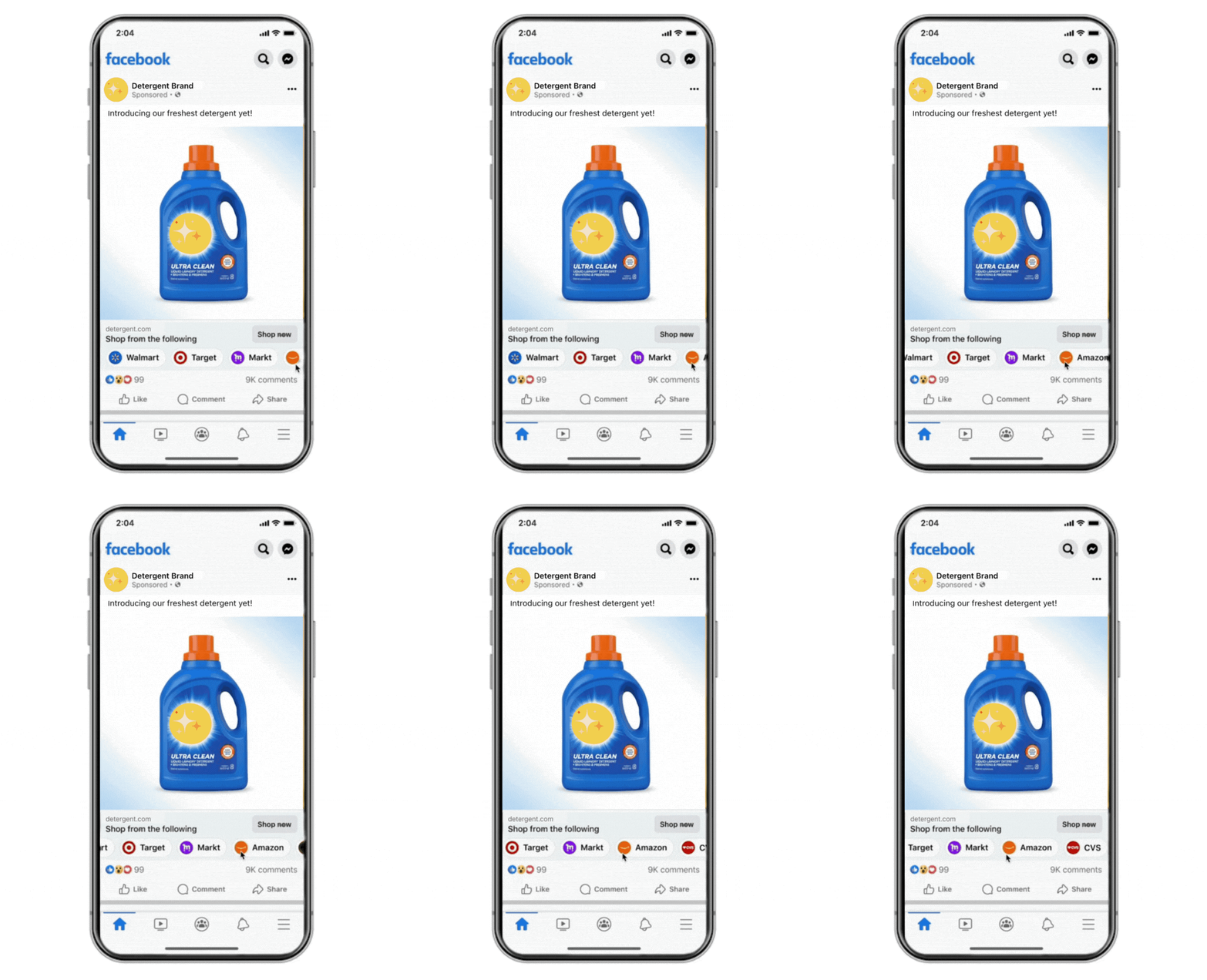
Meta is rolling out a new ad format that delivers a major upgrade for brand marketers: Multi-Retailer Ads for Facebook and Instagram. This enhanced site link format now solves one of the biggest friction points in CPG advertising by enabling shoppers to choose their preferred retailer in a single click, without relying on Where-to-Buy interstitials that add unnecessary steps to the purchase journey and negatively impact performance.
Platforms like Meta are looking to address retailer choice more nimbly within their native ad format offerings. But advertisers interested in this kind of multi-retailer functionality will also want to read up on Agentic Shoppable Media. This capability from Ampd provides a deep-linking routing layer that isn't Meta specific. So if you're looking to comply with Fair and Justifiable requirements and intelligently route shoppers to retail without relying on interstitials, there is now a channel-agnostic direct-to-retailer solution you can leverage.
This article will unpack what’s new, why it matters, and how agencies and practitioners who manage commerce media should adjust their tactics.
 Fair, Equitable, and Effective
As you can see from the demo, this functionality from Meta is a major step forward for CPG brands looking to comply with fair and equitable laws while also providing their shoppers a one-click path to purchase to their preferred retailer.
How to Leverage Multi-Retailer Ads
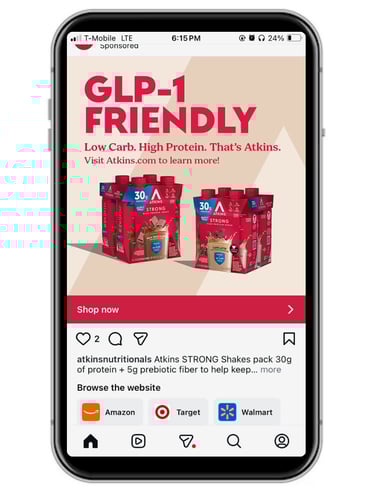
Using Meta's special ad type, advertisers can include 3–20 retailer links inside a single static or video ad. Here are few things to keep in mind about this type of site link:
- Retailer logos auto-populate
- When you add retailer URLs inside the “Site links” setup, Meta automatically generates retailer logos to appear as clickable thumbnails. No creative lift required.
- Randomizing retailer listing order is optional
- Brands can either manually control the position of each retailer link, or allow Meta to randomize the order, functionality appreciated by CPG companies concerned with ensuring “fair and equitable access” in order to comply with the Robinson-Patman Act.
- Reporting reflects Retailer-specific metrics out of the box
- As you can see from this screenshot of the Meta reporting dashboard, it’s straightforward to analyze metrics broken down by each retail destination
- As you can see from this screenshot of the Meta reporting dashboard, it’s straightforward to analyze metrics broken down by each retail destination

Ampd Unlocks Optimization based on Retailer Sales
Ampd has built additional capabilities that extend beyond what's possible with Meta's Multi-Retailer ad units. Ampd Signal enables marketers to further the utility of their multi-retailer ads by training Meta's algorithms based on commerce signals from retailers.
This enables marketers to use Ampd to:
- Build audiences and retarget based on retail intelligence
- Benefit from deep linking to all retailers
- Infuse deterministic and probabilistic commerce signals back into Meta
- Automatically optimize budget allocation toward the highest converting ads
We’ve long invested in solutions that reduce friction between media and retail, which means Multi-Retailer Ads and Agentic Shoppable Media are a perfect complement to how Ampd helps brands scale.
 Meta Streamlines the “Where-to-Buy” experience
Multi-Retailer Ads align with Meta’s broader push toward automation and personalization.
What’s more, in delivering a more direct path to retailer choice, Meta is recognizing that every additional step in the customer journey increases the opportunity for the kind of drop-off that reduces sales performance.
Frictionless Shopping = Higher Conversions
- With instant retailer choice and no interstitial pages, shoppers spend less time deciding and more time buying.
- Agencies no longer need to create multiple campaigns or ad sets for each retailer destination.
- Shoppers can readily choose the retailer they trust most.
From a Better Ad Unit to a Frictionless Journey: Agentic Shoppable Media
Ampd launched Agentic Shoppable Media to replace the need for retail selection interstitials. Instead of a “Where-to-Buy” page, the shoppers from Ampd-enabled campaigns land directly on the product detail page — in the retailer's own app, already logged in, ready to buy. This means one link serves every retailer. Behind that scenes, Ampd routes each shopper intelligently, using device, location, and behavioral signals to match them to their preferred destination. All this while still respecting the preset allocations prescribed to comply with Fair and Equitable requirements.
Enterprise CPG brands using Agentic Shoppable Media have already seen the impact of removing friction in the shopper journey.
Want to compare the numbers and understand the potential impact on your own advertising outcomes? Be sure to check out our Commerce Calculator, which models the revenue impact of replacing Where-to-Buy pages with deep-linked journeys using Agentic Shoppable Media.
Takeaways:
If your brand sells through multiple retailers, a solution like Agentic Shoppable Media or Meta’s Multi-Retailer Ad format can simplify your path to purchase, reduce friction, and unlock more efficiency across your Meta investments.
Ampd specializes in offsite media optimization – and we’re happy to help you integrate Multi-Retailer Ads or Agentic Shoppable Media into your advertising approach.
→ Schedule a strategy session to learn more about how you can leverage Multi-Retailer Ads and maximize your retail performance with Ampd.

.png?width=200&height=200&name=Offsite%20Insights_LI%20Newsletter%20Visual%20(1).png)